




Is Cancun safe to visit in 2026?
Yes, Cancun is safe to visit in 2026. It sits in Quintana Roo, one of Mexico’s lower-risk states with a Level 2 U.S. State Department advisory, the same level assigned to France and the UK. The Hotel Zone and major resort areas are well-patrolled and most visitors have entirely incident-free trips. Petty theft and tourist scams are the primary concerns, not violent crime directed at visitors.


Cancun is Mexico’s most visited city, welcoming over 30 million passengers annually to its airport. The beaches, all-inclusive resorts, cenotes, and Mayan ruins draw travelers from all over the world, and the local economy depends entirely on keeping those visitors safe and happy.
That doesn’t mean that there’s no crime here, because there is, and it has been increasing. But the picture is more nuanced than either dismissive reassurance or alarming headlines suggest. This guide gives you the real story.
Is Cancun Safe to Visit? What the Travel Advisories Say
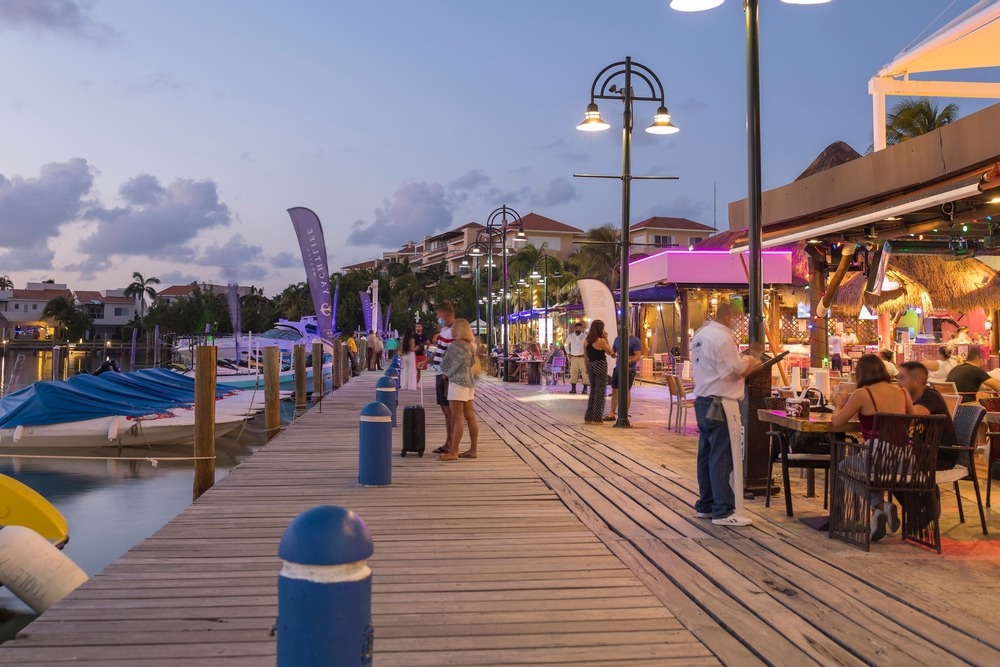
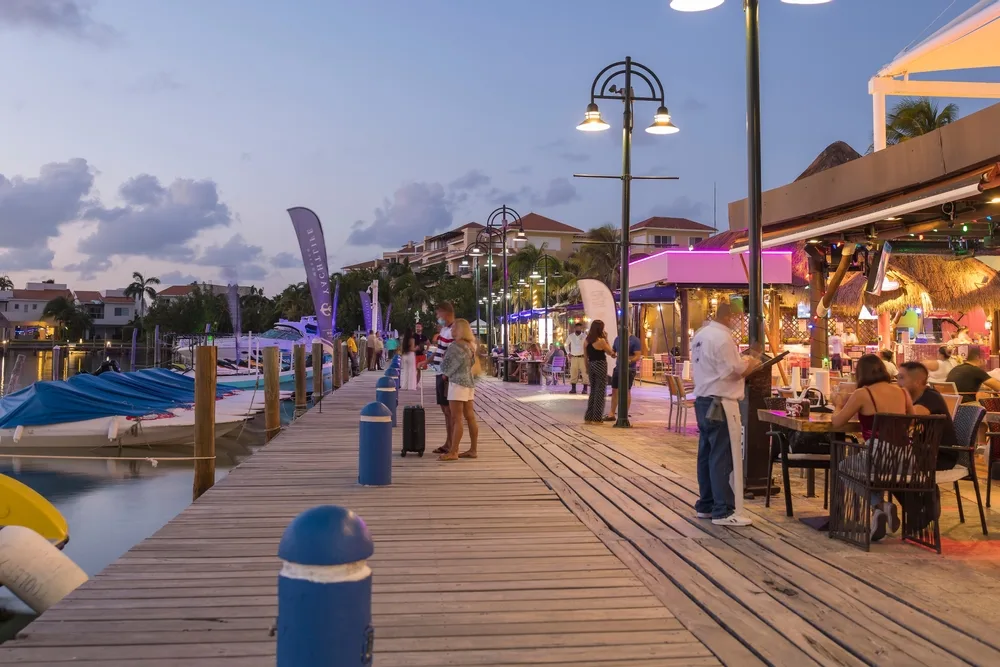
Cancun, Quintana Roo, Mexico, OCT 11 2021, sunset view at La Isla harbor in Cancun, Quintana Roo, Mexico/Erich Sacco/Shutterstock
Quintana Roo, the state where Cancun is located, carries a Level 2: Exercise Increased Caution advisory from the U.S. State Department. That is the second-lowest rating in a four-tier system and the same level currently assigned to the United Kingdom, France, Germany, and Italy. There are no restrictions on travel for U.S. government employees in Cancun or the surrounding Riviera Maya.
The Canadian government advises exercising a high degree of caution in Mexico generally, but Quintana Roo is not flagged as a higher-concern region. The Australian government takes a similar position. The UK government gives its citizens a green light to travel to Cancun and Quintana Roo while recommending standard precautions.
This puts Cancun in a materially better advisory position than Puerto Vallarta, which sits in the Level 3 state of Jalisco. It is comparable to Cabo, though Cancun’s actual crime index is somewhat higher.
I personally visit the areas surrounding Cancun (Riviera Maya, Playa Mujeres, Tulum) several times per year and I’ve never felt unsafe. However, I also take a pre-booked shuttle to the resort and never leave. If you want to hedge as much risk as possible, I’d suggest doing the same thing.
A Note on February 2026
The cartel violence triggered by the killing of El Mencho on February 22, 2026 initially spread to Quintana Roo. The U.S. Embassy issued a brief shelter-in-place directive that included Cancun, Playa del Carmen, Cozumel, and Tulum.
However, the U.S. Embassy confirmed that the situation in Quintana Roo had returned to normal by February 23, within 24 hours of the initial alert. No curfews or movement restrictions remain in place for Cancun or the surrounding area.
✔️ Absolute Necessities in Cancun:
- Private Airport Transfer from Cancun Airport to Resort (Super affordable!)
- Our Favorite Travel Insurance (Very affordable, takes less than 5 minutes)
- Cancun Airport MERA Lounge Access (Tickets almost always sell out day of)
🛎️ Our Top Resort Picks:
- Atelier Playa Mujeres – Modern and luxurious. Great for honeymoons
- Turquoize at Hyatt Ziva – Adults-only, amazing seascapes
- Le Blanc Spa Resort – Ultra-luxurious, adults-only, private beach & great pools
Crime in Cancun: What the Numbers Show


Cancun, Mexico – 20 December, 2019: Biggest Cancun Shopping Mall La Isla (The Island) that sells everything from souvenirs to brand name luxury clothing. A home of Cancun Aquarium/eskystudio/Shutterstock
Cancun’s crime statistics require honest context. The Numbeo Crime Index rates Cancun at around 56 out of 100, which is higher than Cabo (44.5) and Puerto Vallarta (37 to 44), but considerably lower than Tijuana (72.8) or Mexico City (68). Cancun’s 2024 homicide rate was approximately 64 per 100,000 residents.
That sounds alarming until you compare it to St. Louis, Missouri (69.4 per 100,000), which is consistently ranked among the most dangerous cities in the United States. The critical distinction for visitors is that tourist areas post dramatically lower crime rates than the overall city statistics suggest.
In the Hotel Zone and major resort corridors, crime rates are estimated at roughly 4 per 100,000, a fraction of the citywide figure. The National Guard has been permanently deployed in Cancun since 2021 specifically to protect tourist areas, and over 80% of resorts have upgraded to 24-hour surveillance systems in recent years.
The most common crimes affecting tourists are robbery (accounting for nearly 25% of reported crime), pickpocketing, card skimming, and phone snatching. Cartel violence does occur in Cancun, but it is overwhelmingly targeted, cartel members against rival cartel members, and concentrated in the outskirts of the city rather than tourist zones.
When incidents have spilled into tourist areas, such as the April 2023 incident where four bodies were found near hotel beaches, the victims were linked to cartel activity, not foreign visitors.
Safest Areas in Cancun
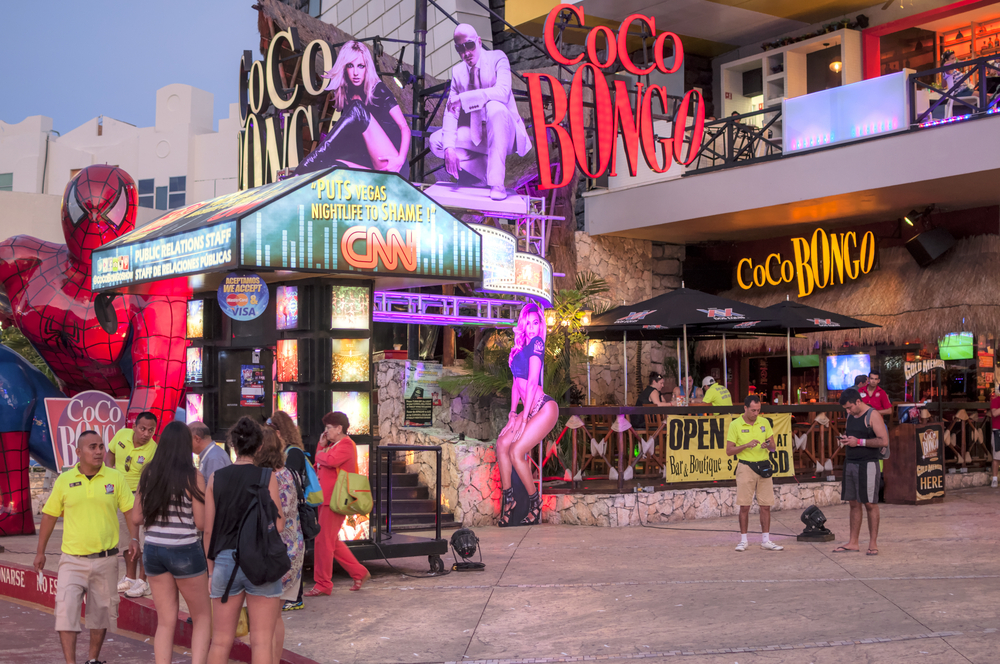
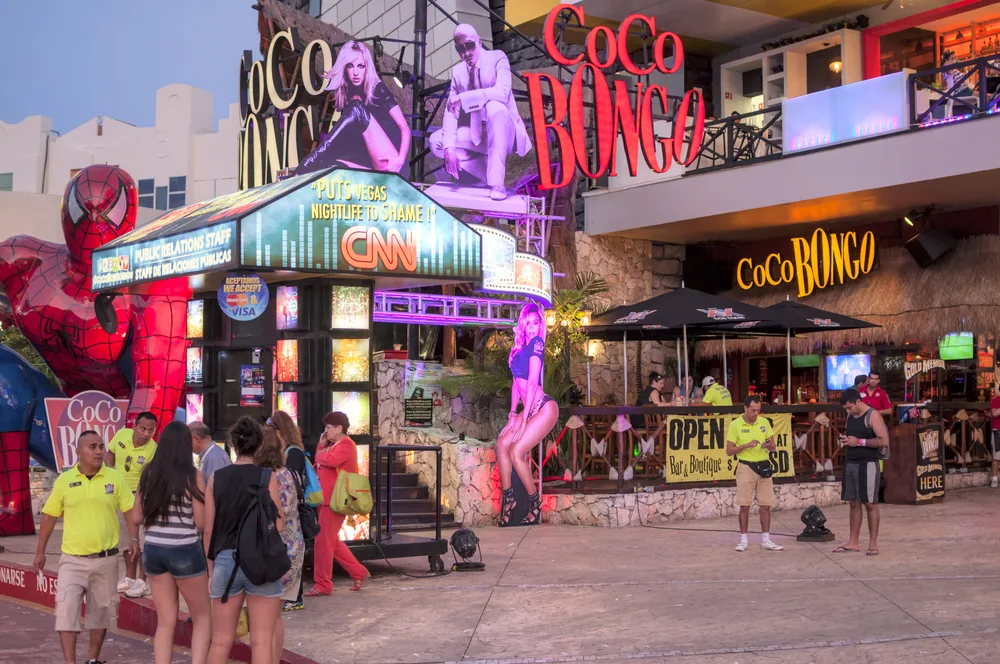
CANCUN, MEXICO – JANUARY 22, 2015: Coco Bongo is a popular nightclub in Cancun with great entertainment and effective visual promotions/Chad Zuber/Shutterstock
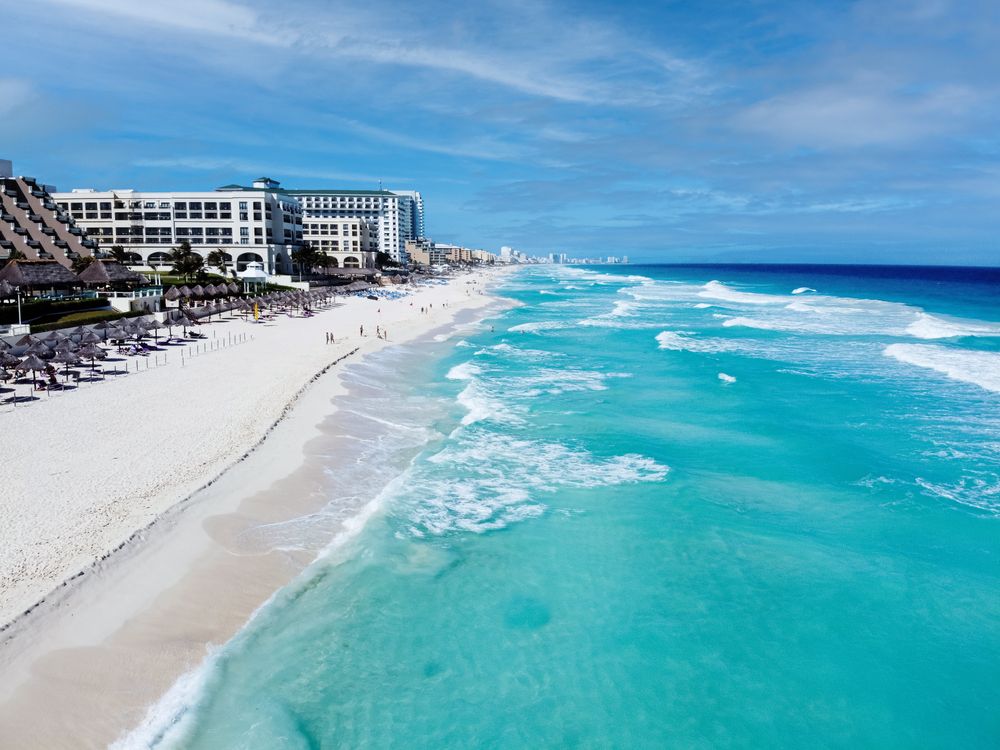
- The Hotel Zone (Zona Hotelera) is a 15-mile strip of resorts, restaurants, and beach clubs along a narrow peninsula between the Caribbean Sea and Nichupte Lagoon. It is the safest part of Cancun for tourists. Police patrols are constant, resort security is extensive, and the density of visitors and staff means problems are spotted and addressed quickly. The vast majority of tourists spend their entire Cancun trip within this corridor and experience nothing but sunshine.
- Isla Mujeres is a small island a short ferry ride from Cancun with a relaxed, village atmosphere and a very low crime rate. It is one of the most pleasant and safe day trips from the Hotel Zone.
- Puerto Cancun and the north hotel strip near the newer resort developments are quiet, well-secured, and considered very safe.
- Downtown Cancun (El Centro) is where locals live and work. Avenida Tulum and the surrounding streets hold budget hotels, local restaurants, and markets worth visiting. It is broadly safe during the day and in the early evening. After midnight, stick to main roads and use a taxi or Uber rather than walking.
Areas to Avoid
- Bonfil, Valle Verde, Santa Cecilia, and Tres Reyes are residential neighborhoods with significantly higher crime rates. None of these areas have tourist infrastructure and there is no reason to visit them. They are located well away from the Hotel Zone.
- Inland neighborhoods past Kabah Avenue get fewer police patrols and less street lighting. Avoid these areas at night and only visit during the day with a trusted driver if you have a specific reason to go.
- Outskirts of the city generally carry higher risk the further you move from the tourist corridor. The safety gap between the Hotel Zone and the city’s residential periphery is real and worth respecting.
Is Cancun Safe for Families?
Yes. Families staying in the Hotel Zone benefit from extensive resort security, lifeguarded beaches, and a well-controlled environment. The main practical concerns are beach flag awareness, sun protection, and keeping an eye on belongings in crowded areas. The Hotel Zone is designed almost entirely around the tourist experience and is well-suited to family travel at any time of year outside peak hurricane season.
Is Cancun Safe for Solo Travelers?
Generally yes within the Hotel Zone and during daylight hours. Solo travelers should apply extra caution at night, avoid walking alone on poorly lit streets, and be particularly vigilant in nightclub settings. The tips around drink safety are especially important for solo visitors. Uber is your friend for getting around safely without negotiating with unknown taxi drivers.
Is Cancun Safe for Female Travelers?
Female travelers have been specifically targeted in Cancun’s nightlife scene through drink spiking and assault. This is not a reason to avoid Cancun, but it is a reason to take the drink safety warnings seriously and to go out with trusted company rather than alone.
The Hotel Zone and resort areas during the day are comfortable and safe for female travelers. Evening and nightlife situations require the same heightened awareness as in any major party destination anywhere in the world.
Frequently Asked Questions
jpbarcelos/Shutterstock
Here are some common questions that people ask about visiting Cancun:
Is Cancun safe to visit right now in 2026?
Yes. Quintana Roo returned to normal conditions within 24 hours of the February 22, 2026 violence that briefly affected the region following the killing of El Mencho. The U.S. Embassy confirmed normalization on February 23. The Hotel Zone and airport are operating normally with no restrictions in place. Check travel.state.gov for the latest before you travel.
What is the U.S. travel advisory for Cancun?
Quintana Roo, the state where Cancun is located, holds a Level 2: Exercise Increased Caution advisory. This is the same level as France, Italy, and the United Kingdom. There are no travel restrictions for U.S. visitors.
What are the most common crimes in Cancun affecting tourists?
Petty theft and robbery are the most common issues, accounting for roughly 25% of all reported crime. Card skimming, pickpocketing in crowded areas, and drink spiking in nightclubs are the specific risks tourists face most often. Violent crime against tourists is less common but not unknown, particularly in nightlife situations involving alcohol.
Is the Hotel Zone safe in Cancun?
Yes. The Hotel Zone is the safest area in Cancun for tourists, with permanent National Guard deployment, extensive resort security, and constant police patrols. Crime rates in the tourist corridor are estimated at around 4 per 100,000, far below the citywide average. Stay in well-lit, busy areas at night and you are very unlikely to encounter problems.
Is Uber safe in Cancun?
Yes. Uber is legal in Cancun, widely used, and generally considered the safest way to get around. Always verify the driver and vehicle match the app before entering. It is a significantly better option than hailing unofficial taxis, particularly at the airport and late at night.
Is Cancun safe during spring break?
Cancun is functional and manageable during spring break but noticeably riskier. The U.S. Embassy has issued specific safety warnings for spring break season highlighting increases in crime, drink spiking, and assault in downtown and nightclub areas. If you visit in March or April, the nightlife safety tips in this guide are especially important.
Which is safer: Cancun or Cabo?
Cabo has a lower crime index (44.5 vs. 56 for Cancun) and sits in a Level 2 state with a smaller, more contained tourist corridor. Both are safe for tourists who take standard precautions, but Cabo's overall crime statistics are better. The type of risk is similar in both cities: petty theft, scams, and nightlife-related incidents are the primary concerns for visitors in each destination.
Is downtown Cancun safe?
Downtown Cancun (El Centro) is safe to visit during the day and early evening. It offers a more authentic experience than the Hotel Zone with local restaurants, markets, and culture. After midnight, stick to Avenida Tulum and main streets, travel with others, and use Uber or a reputable taxi rather than walking. Avoid the neighborhoods listed in the areas-to-avoid section above at all times.
Final Verdict
Cancun is safe for tourists who stay in the Hotel Zone, use reputable transportation, and apply the same common sense they would in any busy tourist destination. Its crime index is higher than Cabo or Puerto Vallarta, and its cartel-related violence has been increasing.
But the tourist corridor is one of the most heavily secured and monitored stretches of coastline in Mexico, the Level 2 advisory is the same as major European capitals, and the overwhelming majority of visitors have safe and enjoyable trips.
The things most likely to ruin a Cancun trip are petty theft, a drink spiking incident in a nightclub, or an overcharging taxi driver, not cartel violence. Focus your precautions accordingly. And before you travel, enroll in the Smart Traveler Enrollment Program (STEP), the U.S. State Department’s free service that registers your trip with the nearest embassy and sends real-time security alerts directly to your phone.