


Still deciding on your next destination? Diego Suarez, in Madagascar’s far north, deserves a serious look. Beaches, mountains, colonial architecture, and a food scene shaped by four continents all converge in this port city.
Overview
Known officially as Antsiranana, Diego Suarez is the capital of the Diana Region, home to roughly 125,103 people and a visible blend of Arab, colonial, Indian, and Creole influences. Framed by pristine beaches and varied landscapes, the city served as a key fueling station for French military and commercial steamships back in the 1880s.
Its name traces back to Portuguese navigator Diogo Soares, who anchored in the bay in 1543. Local legend holds that the bay later became a favored stop for pirates restocking food, water, and coal before setting out on long voyages, a history that, true or not, helped seed the city’s eclectic mix of cuisines and architectural styles.
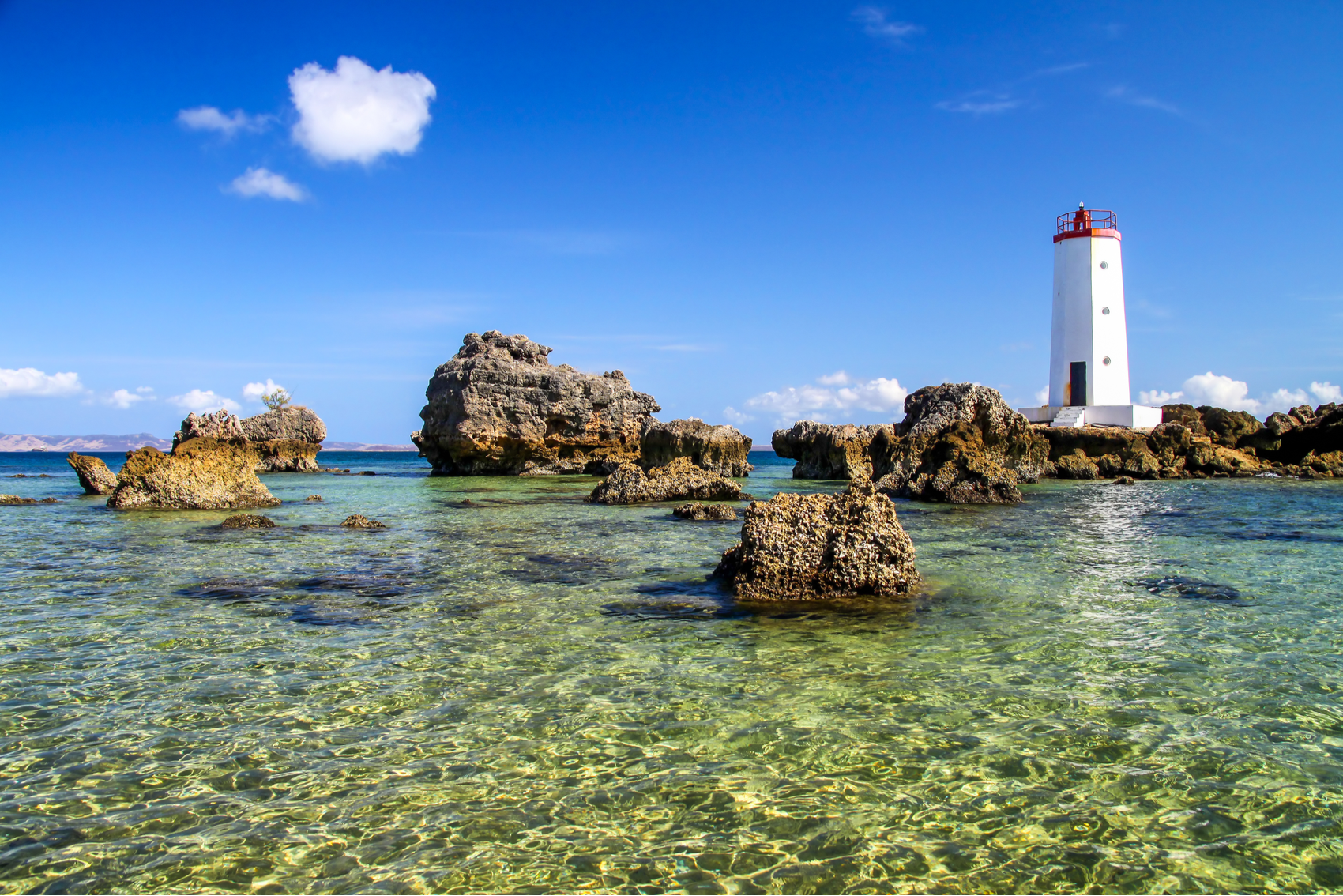
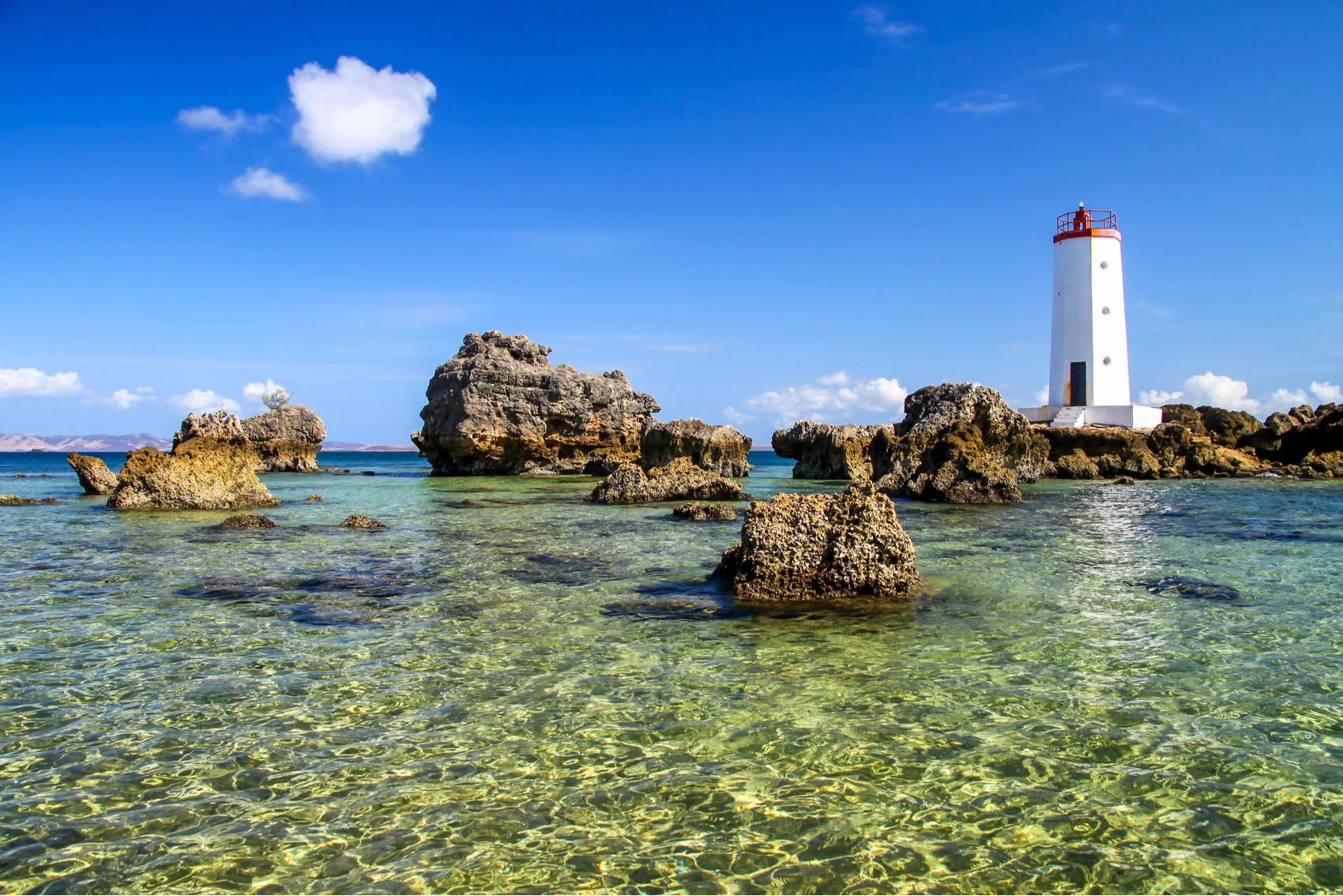
Whatever the pirate lore’s accuracy, Diego Suarez’s natural assets are undeniable. Its bay ranks as the second largest in the world after Rio de Janeiro, and its port is the third busiest in Madagascar, playing a major role in the national economy. Scattered lighthouses and forts still hint at its colonial past, lending the city an old-world character that continues to draw travelers.
Destination Highlights
Diego Suarez rewards almost any kind of traveler, whether you’re chasing beaches, hikes, architecture, or simply good food.
Ramena Beach, Andovokonko Bay, and Sakalava Bay are the city’s three most popular coastal spots, all bordering a lagoon known as the Emerald Sea (Mer D’Emeraude) for its striking turquoise depths. Thanks to Madagascar’s tropical savannah climate, which keeps conditions warm nearly year-round, these beaches draw a steady stream of surfers, divers, snorkelers, and kite and windsurfers.
For landscape and hiking enthusiasts, two destinations stand out: Ankarana Natural Reserve and Tsingy Rouge Park. Ankarana spans more than 180 square kilometers of karst topography dating back 150 million years to the Middle Jurassic, one of the few places on Earth where evergreen dry forest sits directly beside arid savannah. Its name comes from a Malagasy phrase meaning “people from the rocks,” a nod to the caves and outcrops once used as shelter; some caves remain open to visitors, while others are considered sacred and viewable only from a distance. Beneath the surface, a network of underground rivers converges at the “perte des rivieres,” and above ground, the reserve shelters 11 lemur species, 60 reptile species, and an assortment of blind crabs and fish.
Tsingy Rouge Park, 50 kilometers south of the city, is something else entirely: a canyon lined with hundreds of needle-like spires formed from red laterite, a mineral-rich rock and soil common in Madagascar. The word “tsingy” translates roughly to “the place where one cannot walk barefoot,” a reference to the punishing terrain underfoot. While several other Madagascar sites share the “tsingy” name, this one stands apart for its color: nearly everything here, ground, rock walls, even a river running through it, comes in shades of red, broken only by occasional patches of green.
The Best Things to Do in Diego Suarez
Swim in the Emerald Sea
Visitors consistently describe the Mer D’Emeraude as having some of the clearest water they’ve ever seen. Its shallow depth makes it ideal for swimming and snorkeling, as well as kitesurfing and windsurfing. Aim to arrive between 7 and 9 a.m., when water levels sit at a comfortable middle ground and the sun hasn’t yet peaked. Book a larger boat than the standard option, since winds and tides along the way can get unpredictable, and pack sun protection. The colors here shift from soft blue to turquoise depending on the light, so bring a camera. Expect about an hour of travel time from central Diego Suarez.
Step back in time at Ankarana Natural Reserve
Beyond its karst formations, Ankarana hosts uncommon endemic songbirds like the souimanga sunbird, the Madagascar greenbul, and the Madagascar paradise flycatcher, along with Sanford’s brown lemur and the crowned lemur. Choose between an easy, flat trail completable in about an hour, or a more technical 4-to-5-hour hike through the reserve’s caves, forests, and footbridges. La Grotte d’Andrafiabe is the largest cave open to visitors; some caves and water sources are considered sacred, so check with your guide before stepping off the marked trail. The reserve sits 108 kilometers southwest of Diego Suarez, about a 2-hour drive.
Explore Les Trois Baies
“The Three Bays” refers to Dune Bay, Pigeon Bay, and Sakalava Bay along the northeastern coast. Beyond snorkeling, kitesurfing, windsurfing, and swimming in clear water rich with marine life, the route includes stopovers for easy hikes up hills and crags with sweeping coastal views. Entry is free, though you’ll need to charter a boat for the full tour, or rent a four-wheel-drive quad bike to explore the sandy tracks independently. Visit from mid-December to March for calmer conditions (just watch the midday sun); April through November tends to bring stronger winds that can work against kitesurfing and windsurfing.
Visit Tsingy Rouge Park
Travelers often call this park “out of this world,” and it’s easy to see why. The park spans roughly 15 kilometers of red laterite spires, nicknamed “fairy chimneys” by locals, ranging from a few inches to 20 or 30 feet tall. Visit between 8 and 10 a.m. or 2 and 4 p.m., ideally on a cloudy day, both to avoid the heat and to make the 15-kilometer dirt trail easier going.
One important note: the only restroom is near the entrance gate, with no facilities along the trail. Bring your own toilet paper, hand sanitizer, and at least a liter of water. The access road from central Diego Suarez is rough and pothole-heavy, so expect a bumpy 40-minute to 1-hour drive, but the destination makes up for it.
Hike up to Castle Windsor
Perched roughly 1,300 feet above sea level, Castle Windsor was built in 1900 by the French military as a lookout against enemy ships and remained in service until after World War II. It’s now one of Diego Suarez’s most treasured historical sites. Reaching it takes about a 2-hour drive to the base of the hill, followed by a multi-hour hike to the summit. The climb is demanding and best suited to travelers in good physical condition, but those who’ve made it consistently call it one of the most rewarding experiences of their trip. Aim for January through September, when winds at altitude are milder, and bring your own food and water since there’s nowhere to buy either along the way.
Where to Stay in Diego Suarez
The city has no shortage of good lodging, but two stand out for quality without a steep price tag.
Varatraza Wind Riders
Facing Sakalava Bay directly, this property pairs old-world simplicity with modern comforts. Bungalows built from indigenous wood and materials lend a rustic feel without sacrificing free high-speed Wi-Fi. Popular among kitesurfing and snorkeling enthusiasts, it consistently ranks among the city’s best value stays, and offers bicycle tours, hiking trips, and canoeing excursions for guests who want more than a beach chair. The main drawback is slow device charging, particularly in the evenings, but its rustic charm and prime location make up for it.
Allamanda Hotel
Set directly across from the Bay of Diego, the Allamanda Hotel is among the most centrally located and best-value options in the city. It takes its name from a golden, trumpet-shaped flower that blooms year-round and grows in abundance around the property. From its spot on Rue Richelieu, it’s a 5-minute walk to Joffre Square and a 5-minute tuk-tuk ride to the town center. Not every room has a bay view, so request one with a sea-facing deck to get the full experience.
Getting Around Diego Suarez
The tuk-tuk, a two-stroke tricycle built to carry two or three passengers, is the city’s primary mode of transport. These compact vehicles come fitted with metal cabins, tarpaulin roofs, and upholstered seats that double as storage, plus a bit of extra room behind the seats for additional luggage or another passenger. Top speed tops out around 40 to 50 kilometers per hour, but they can carry loads of up to 500 kilograms without trouble. Car rentals are available too, but riding a tuk-tuk is part of the Diego Suarez experience and worth doing at least once.